Technical article
Uponor PEX-A vs. Crimp-Style PEX: What a Real Cost Comparison Looks Like
Why a Purchasing Manager Is Comparing Pipe Systems
I'm not a plumber. My job is procurement—managing vendor relationships, comparing quotes, and making sure the numbers add up before I sign anything. So when our facilities team told me we needed to repipe Building C, I did what I always do: collected quotes and built a spreadsheet.
The problem was that the quotes didn't compare. One contractor proposed Uponor PEX-A with ProPEX expansion fittings. The other pitched a crimp-style PEX system. Different materials, different labor estimates, different tool requirements. I couldn't tell which was actually cheaper, and the more people I asked, the more I heard "it depends."
So I spent about three weeks of spare cycles reading spec sheets, calling distributors, and annoying our mechanical contractor with basic questions. This is the comparison I wish someone had handed me at the start.
The framework: I ended up comparing the two systems across three dimensions that actually map to my job: installed cost, long-term reliability, and total cost of ownership. Not "which pipe is better in theory"—I don't have the engineering background for that—but "which system is the better decision for this project and this budget."
Dimension 1: Installed Cost (Or: Labor Is the Variable That Matters)
Material cost per linear foot is the number most quotes highlight. It's also the least useful number for comparison, unless you're doing the labor yourself—which, in a commercial building, you're not.
Here's what I found. As of Q4 2024, Uponor PEX-A tubing ran roughly 10–15% more per foot than the crimp-style PEX we were quoted. That sounds like a clear win for crimp-style PEX, until you factor in installation time.
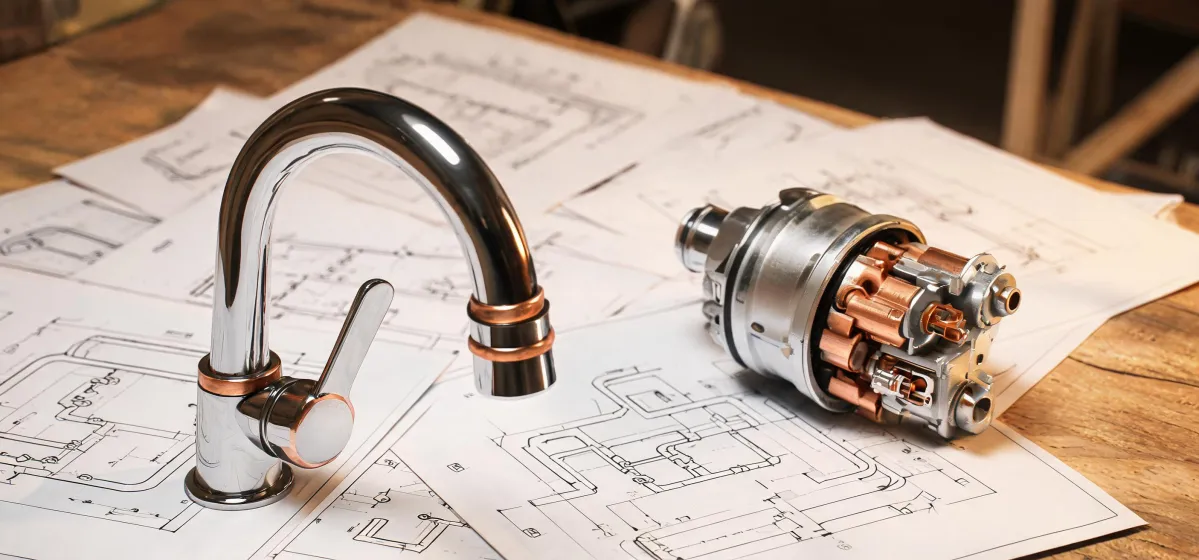
Uponor's PEX-A system relies on expansion fittings—the ProPEX connection system, including products like the Uponor TotalFit 3/4" coupling—and requires a dedicated expansion tool. The contractor charges for that tool. But the connections themselves are fast: insert, expand, release, and the PEX-a's material memory creates the seal. No crimp rings. No go/no-go gauge checks on every fitting.
The crimp-style system we quoted took the other approach: insert the barbed fitting, slide on a crimp ring, and use a crimping tool. It's a well-established method. But it's slower, and it carries a specific risk—you need to inspect every crimp to make sure the tool was properly calibrated and the ring fully compressed.
My conclusion: The material premium for Uponor PEX-A was largely offset by lower labor time. Not entirely—the crimp system came in about 4% cheaper installed. But the gap was small enough that reliability and warranty started to matter more than the sticker price.
"The lowest quote wasn't the lowest cost. The labor hours told a different story than the material line items."
Also—and I keep coming back to this—when I asked the crimp-system contractor about his labor estimate, he admitted the number assumed "no complications." I've heard that before. That's not a number I can plan around.
Dimension 2: Long-Term Reliability and Warranty
This is where the comparison got interesting, because it moved away from numbers and into something I had to evaluate on judgment.
Both systems meet the relevant standards—ASTM F877 for PEX tubing, CSA B137.5 in Canada, and the various fitting standards that go with them. On paper, both are code-compliant. But the actual failure modes are different.
Crimp-style fittings rely on a mechanical compression—a metal ring deformed onto the pipe and fitting. If the crimp is correct, the connection holds. If it's marginal, it might hold for years and then fail. That's the kind of thing that keeps you up at night.
PEX-A expansion fittings work differently. The pipe expands, the fitting goes in, and the material's cross-linked structure tries to return to its original shape—creating a continuous, stress-reduced seal. The mechanism is more forgiving of minor installation variation, or at least that's what the manufacturer and our contractor argued.
I'll be honest: I can't verify that claim independently. What I can verify is the warranty. Uponor's limited warranty for PEX-A systems covers 25 years for commercial installations (when installed by a licensed contractor using approved components). The crimp system we compared offered a 10-year warranty on the fittings, 20 years on the tubing.
Which matters to a purchasing person? A longer warranty is nice, but only if the company backing it will still be around to honor it. Uponor is a large, established manufacturer. I checked. The warranty terms had specific conditions—proper installation by a licensed professional, use of approved components, documented maintenance—and I made sure our contractor was willing to sign off on all of them.
The warranty didn't make the decision for me. But it changed the risk profile. With a 25-year window and clear installation requirements, I could see a pathway to documenting compliance. With the shorter warranty, I'd be counting on "no defects" rather than having a contractual backstop.
Dimension 3: Total Cost of Ownership (The Number Most Quotes Ignore)
This is where I frustrate a lot of vendors. I don't compare quotes on the bottom-line number. I compare them on what I'll actually pay over the life of the system. I've been burned before—a vendor who looked cheap on paper cost us real money in rework and delays.
The Framework I Used
- Material cost: Straightforward. PEX-A ran higher per foot.
- Labor cost: PEX-A came in lower in hours, partially offsetting the material premium.
- Tool cost: The expansion tool added about $600–$800 for our project. The crimp tool was cheaper upfront (under $200). But the expansion tool was included in the contractor's package price, and the crimp tool cost was billed separately. That detail mattered.
- Inspection and testing: With crimp fittings, the contractor planned to pressure-test the system in segments, with a go/no-go gauge check on every fitting. With expansion fittings, the first fix was simpler, but the system still needed a full pressure test. Both passed. The labor hours for testing were similar.
- Risk cost: This is the one that's hard to quantify but easy to feel. If a crimp fitting fails in a wall—say, five years from now—you're opening drywall, fixing the fitting, patching, painting, and paying for after-hours work to minimize disruption. I've managed that scenario before. It's not cheap.
When I added it up, the Uponor system came out about 6–8% higher in total first-year cost. But the risk-adjusted number—if I factored in even a modest probability of one or two fitting failures over a 20-year period—the gap narrowed to roughly 2%.
Here's the part that surprised me: The crimp system wasn't cheaper enough to justify the extra inspection and failure risk. I expected the price gap to be wider. It wasn't. The "cheaper" option was only marginally cheaper once you did the math honestly.
I'll admit—I second-guessed this conclusion for about a week. Even after we went with the Uponor system, I kept thinking: what if I overpaid for the brand name? The two weeks between authorizing the order and the materials arriving were a little stressful. I didn't relax until the rough-in inspection passed and the contractor's foreman told me the connections had gone in clean. "Fastest repipe we've done this year," he said. That helped.
What This Means for Your Decision
I'm not going to tell you Uponor PEX-A is "better" in some abstract sense. That's not useful. Here's the decision framework I'd use in a similar situation:
Choose Uponor PEX-A (or a comparable expansion-fitting system) if:
- You're paying licensed labor and want to minimize time on site (labor is the biggest variable).
- The installation is in hard-to-access areas—walls, ceilings, chases—where a redo would be painful.
- You value a longer warranty and have a contractor who's comfortable with the expansion process and can document compliance.
- Your total budget can absorb a modest material premium for lower risk.
Choose crimp-style PEX if:
- Budget is the dominant constraint and the installation is accessible for future service.
- Your contractor has a long track record with crimp systems and good quality control on the crimp tool calibration (this is the critical variable).
- The project is a short-term asset or a rental property where you're managing to a different horizon.
The honest answer? Both systems work when installed correctly. The difference is in the cost of installation, the risk profile of the connection, and the warranty you can hold the manufacturer to. Those are all TCO factors, not just price factors.
For our project, the Uponor system was the right call. The margin was narrower than my gut expected, and I'll freely admit I don't have the engineering background to evaluate the long-term performance claims empirically. But the labor hours, the warranty terms, and the risk profile came together in a way that made sense to both me and the finance team.
And that invoicing issue I mentioned earlier? When the contractor initially quoted the Uponor system, the invoice included a "specialty tool charge" that wasn't in the original bid. I caught it in review. The contractor corrected it—it was a standard tool rental, not a purchase. But if I hadn't built the comparison spreadsheet with line-item detail, I would have missed it. The $540 would have gone through as a "materials" expense and nobody would have questioned it.
That's the thing about TCO. It's not just about the big numbers. It's about noticing the $540 line item that doesn't belong—and having the framework to spot it.

Nisha Kapoor
Nisha Kapoor is a construction-systems analyst covering formwork, scaffolding, shoring, prefabricated buildings, modular rooms, panelized assemblies, geotextiles, geogrids, and drainage composites. She uses ASTM D4595 and ASTM D6637 for their respective geotextile and geogrid tensile evaluations while tracking platform load, form deflection, prop spacing, module tolerance, lifting points, seam strength, aperture stability, and installation damage. Her technical guides help contractors, engineers, and developers coordinate temporary works, factory tolerances, site logistics, ground reinforcement, inspection hold points, and documented acceptance criteria.