Technical article
One Purchase Order, Three Different Supplier Decisions: Moen Faucets, Bulk Coatings & Copper Fittings
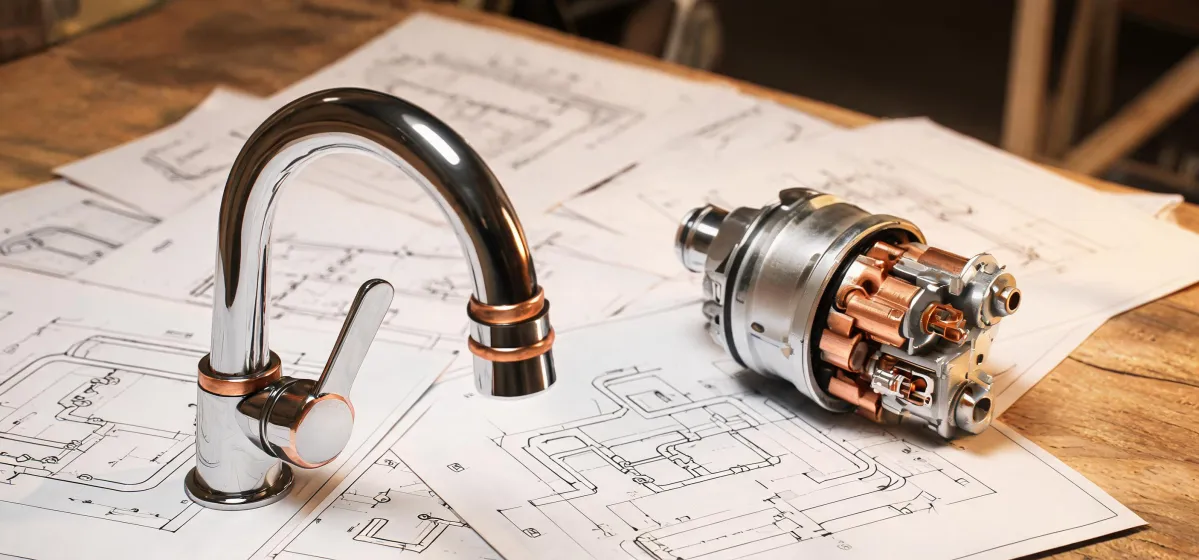
I'll admit something: for my first year as a purchasing administrator, I shopped every material category the same way. Whether the request was for a Moen kitchen faucet, a bulk architectural coating delivery, or a crate of copper fittings for a repipe, my process was basically identical—get three quotes, compare the totals, pick the lowest number. Easy.
Then I had a coating order go sideways in 2023 and a copper fitting shipment rejected in 2024. Those two incidents taught me what I should have known from the start: these are not the same type of purchase, and they should not be evaluated with the same supplier criteria. I still believe in one-stop sourcing, but only when a supplier can prove they understand each category's own rules.
Here is how I sort it in my head:
- If the request is brand-specific, like a Moen kitchen faucet or a Moen diverter valve replacement, I treat it as a warranty and traceability purchase.
- If the request is for a performance material, like an elastomeric coating, a roof coating, or a large architectural coating system, I treat it as a technical accountability purchase.
- If the request is for a code-regulated commodity, like copper fittings, I treat it as a specification purchase.
Let me walk through each one, because the advice is genuinely different.
Scenario 1: The Spec Says Moen Kitchen Faucet or Moen Diverter Valve
A commercial kitchen or a bathroom renovation often has a line item that says Moen and a model number. When that happens, the buyer's real job is not finding the cheapest faucet. It is protecting the warranty and the specification. I can negotiate price later; I cannot easily fix a supplier who sells me something that looks right but has no traceable paperwork.
For a Moen kitchen faucet, I want the correct model number, the matching finish code, and either an authorized distributor invoice or a written statement confirming the product's channel of origin. Moen's warranty terms are published at moen.com/warranty, and they are worth reading before you order, not after a leak appears. I last checked that page in January 2025, but verify current terms. This is especially important if your customer's contract says Moen or approved equal. If you cannot prove that the item is exactly what the spec calls for, the approval process becomes a headache.
Here is where my view might go against conventional wisdom: if a spec says Moen, I do not substitute a generic replacement part just because the fitment chart looks the same. That doesn't mean generic parts are bad. It means I am not in a position to take that risk when the contract and warranty are based on the original brand. Generic replacement parts can make sense on my own property; they make less sense on a project where the brand is a contractual requirement.
For the Moen diverter valve side of the order, my advice is a little less obvious: verify the actual valve generation before you source. The word diverter is used for tub spout diverters, transfer valves, and the cartridge that routes water between the showerhead and tub spout. Those are different parts. I've learned to ask for the rough-in model or the part number printed on the old valve body. A supplier that asks that question is more useful to me than one that just quotes the phrase diverter valve.
When I handle these requests, I keep the quote sheet simple: brand, model number, finish, quantity, unit price, and delivery week. If the supplier can't put those in writing, I move on. It sounds basic, but it saves returns and warranty disputes later.
Scenario 2: When I Evaluate an Elastomeric Coating Supplier, Technical Data Comes First
Coatings are the opposite of the branded-fixture purchase. Nobody asks whether our architectural coating is a famous brand; they ask whether it will stick, bridge hairline cracks, and survive weather for the warranty period. That changes the supplier criteria completely.
When I am evaluating an elastomeric coating supplier, the product data sheet matters more than the price sheet. I want to know the percent elongation, the permeability rating, the recommended dry film thickness, and what substrate preparation the manufacturer requires. If the coating is going on a roof, I also ask which test method it was evaluated to—ASTM D6083 is a common benchmark for liquid-applied acrylic roof coatings (Source: ASTM International; check the current edition). If the coating is for walls, I ask the same question: what standard is it tested to?
The thing I used to get wrong: I assumed a lower price meant the supplier had found a cheaper way to make the same formula. In reality, the causation runs the other direction. Manufacturers who invest in raw material quality, batch testing, and technical support have higher costs, and those costs show up in the price. That doesn't mean expensive is always better; it means price is not the starting point. You have to start with what the product is supposed to do.
With bulk architectural coating, I also verify batch consistency. In 2024, we ordered enough coating for a multi-building exterior project. The first supplier quoted us a great per-gallon rate but couldn't confirm whether the second production batch would match the first for color and viscosity. That was a deal-breaker for us. When a project covers 40,000 square feet, you don't want to find out halfway through that the second batch is different. Ask for batch numbers, manufacturing dates, and a written statement from the manufacturer that they will supply the same formula for the duration of the project.
If a coating supplier provides a technical data sheet but no manufacturer's batch traceability, I treat it as a warning sign. I'd rather pay a bit more and get a partner who can explain the product, not just sell me drums.
Scenario 3: How to Choose Copper Fittings for Wholesale
Copper fittings are the third category, and the hardest for a general purchasing person to learn because the differences are not visible in a photo. If I need to choose copper fittings for wholesale, I stop thinking like a buyer and start thinking like a spec writer.
The first question is not what's your price per piece? It is what standard do these fittings meet? I ask for ASME B16.22 if the fittings are wrought copper solder-joint fittings, or ASME B16.18 for the cast version (verify current editions at asme.org). If the project involves copper tube, I ask about ASTM B88 pipe types as well. The inspector on the job will care about these markings, and if the markings are not there, the whole shipment can be rejected—even if the price was great.
Here is a mistake I made in 2024: I ordered a large lot of copper fittings and focused on the total cost instead of the pressure rating. The shipment was a mix of DWV and pressure fittings, and we didn't catch it until the plumbing inspector flagged the boxes on site. That cost us rework and a delayed schedule. DWV fittings are not interchangeable with pressure fittings in a supply system, and no amount of negotiating will change that.
When I compare wholesale copper quotes, I look at copper commodity prices the same day, using LME and COMEX as common references. Copper prices move almost daily. A quote that sits far below the current copper market price isn't necessarily a bargain; it might mean thin-wall material, fittings that don't carry the right markings, or a supplier who is about to surprise you with a surcharge. I ask for the alloy grade and the applicable standard in writing before I compare unit prices.
How to Know Which Scenario Applies
If you're not sure which scenario you're in, ask this question: what does failure look like?
- If failure means the customer says this is not the brand we specified, you are in scenario 1. Buy for traceability.
- If failure means the coating cracked, peeled, or didn't last, you are in scenario 2. Buy for technical data and manufacturing accountability.
- If failure means the inspector rejected the material because the markings aren't right, you are in scenario 3. Buy for standard compliance first.
Your buying process should match the failure mode. When I choose the wrong mode, I pay for it.
What's Changed, and What Hasn't, Since 2021
This may sound like a lot of discipline, but the process has become easier in some ways. When I took over purchasing in 2021, I relied on memory and relationships. By 2024, most suppliers had digital product data sheets, batch records, and traceable ordering systems. That changed the game: now I can verify before I buy, not after.
Still, I have mixed feelings about the shift. On one hand, all the paperwork is a hassle on a busy day, and I sometimes miss the old counterman who simply knew what tub spouts we used for the last ten years. On the other hand, the same documentation that feels heavy is what protects my company when a project goes wrong. I've learned to accept both: keep the relationship, but ask for the paperwork.
The bottom line? If you have a purchase order that mixes Moen faucets, diverter valves, bulk coatings, and copper fittings—which happens all the time once you get into maintenance—don't hand the whole order to a supplier based on a single impression. Test each category with the right questions, and you'll get better bids, fewer field issues, and a lot fewer late-night phone calls after an install. If you ask me, that's worth more than the lowest quote.

Emilia Novak
Emilia Novak is a flooring and architectural-surfaces analyst covering ceramic and porcelain tile, natural stone, resilient flooring, underlayments, countertops, adhesives, grout, and installation accessories. She uses ASTM C373 and ASTM C648 test evidence while comparing water absorption, breaking strength, slab flatness, substrate moisture, joint width, slip resistance, and installed tolerances. Her specification guides help architects, contractors, and buyers match surface systems to traffic, wet-area exposure, maintenance demands, and substrate conditions.