Technical article
Cheapest Isn't Cheaper: What 200+ Rush Orders Taught Me About Sourcing Moen Faucets, Vanities, and Coatings
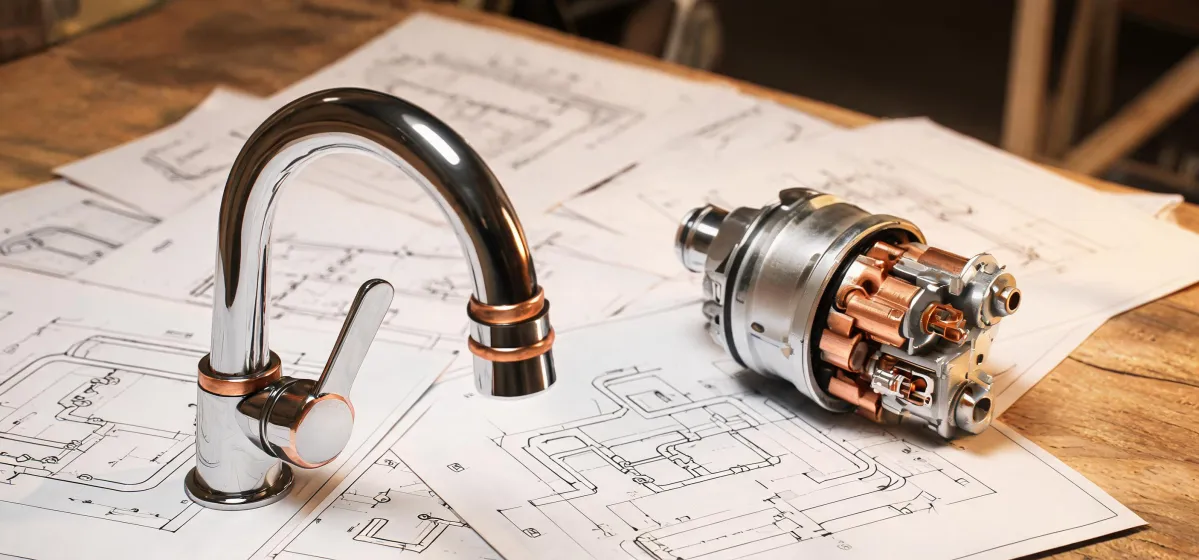
Take it from someone who has coordinated more than 200 rush orders for commercial contractors: the lowest-price bid is usually the most expensive decision in the room. I know that sounds like a slogan, but I've got six years of dispatch logs behind it.
I manage emergency sourcing at a regional building supply distributor on the Gulf Coast. When a contractor calls at 4 p.m. because a shipment didn't show up, I'm the one trying to keep the crew working. Last quarter alone, we processed 47 rush orders with 95% on-time delivery. Nothing special, just boring follow-through.
Here's the frustrating part: most of those calls should never have happened. The building didn't change. The spec didn't change. The deadline didn't move. Someone chose a supplier because the quote was low and hoped the rest would take care of itself.
My opinion, stated plainly: in B2B construction sourcing, total cost matters more than unit price. When a product is tied to a deadline, a specification, or a code requirement, the cheapest quote is usually the most expensive one you will sign.
A Moen kitchen faucet order that cost more than it saved
In June 2024, a contractor renovating a 12-story apartment building called us on a Thursday evening. He needed 40 Moen kitchen faucets on site within 36 hours, before a city inspection. Normal turnaround for that quantity is five to seven working days, so this was a genuine emergency (which, honestly, was avoidable).
Three weeks earlier, he had switched suppliers to save 18% on the entire fixture package. The new supplier promised delivery in seven to ten business days. No need to expedite, the contractor figured. Then the order sat for a week without a tracking number. When the installers reached the kitchens, there were no faucets. He paid us $740 for expedited freight and about $1,900 in weekend overtime for the plumbing crew. The original savings were around $2,100. The bargain lost money before we even mentioned the stress.
A Moen kitchen faucet is a Moen kitchen faucet. What changes is everything around the product: the verified spec, warranty support, the real lead time, and someone who can answer 'where is my order?' with an actual answer. When you buy Moen kitchen faucets in bulk for a project with a deadline, you are not buying hardware. You are buying certainty. Certainty is not a commodity.
Bulk bathroom vanity orders: what the price tag doesn't tell you
Vanities are another category where buyers assume nothing can go wrong. It's a cabinet with a sink, right? Not quite. If you have ever received a bulk bathroom vanity shipment with corners crushed and no replacements immediately available, you know exactly what I mean.
A customer once saved about 9% on a bulk bathroom vanity order — 66 units for a senior living project. The supplier used the cheapest freight option and stacked the boxes like nothing could break. Eleven cabinets arrived damaged. Their response? File a claim, replacements in two to three weeks. That didn't help when eight of those units were needed before the finish crew left the job.
The customer ended up buying replacements from us at retail pricing and paying $650 in rush freight. The 9% savings turned into a $2,300 problem, and the project still slipped four days. Trust me on this one: when a low price appears on a bulk bathroom vanity order, something else got subtracted. Packaging quality. Freight quality. Damage claim follow-through. The product might be fine. The process around it wasn't.
Before you buy vanities for a hotel or multifamily project, ask the boring questions. How are they packaged for LTL freight? Who handles damage claims? What's the actual replacement lead time? Do the units match the accessibility clearances on the drawings? Those answers matter more than the invoice total.
What to look for in an elastomeric coating supplier
Elastomeric coatings are a small part of our catalog but a huge source of emergency calls. If you have ever typed 'what to look for in a elastomeric coating supplier' into a search bar at 11 p.m., this section is for you.
The first thing I want from a coating supplier is documentation. Not a sales page. A technical data sheet and independent test reports. For acrylic roof coatings, I ask to see ASTM D6083 data. If they can't produce third-party lab results, I don't care how good the price looks.
Second, an honest coverage rate. Some suppliers quote the ideal coverage number and ignore real-world substrate conditions. The first time you realize you need a second coat, and maybe a third, the 'cheaper' coating stops being cheaper.
Third, they should ask questions. A good supplier asks about substrate, service temperature, and application method. If they quote without asking anything, they don't know the product well enough. That's a red flag.
We buy construction sealant wholesale by the pallet too, and the same logic applies. A low-cost sealant with a 14-day cure is fine if you have 14 days. It's not fine if the facade inspection is in 10 days and water testing starts after. Time is part of the material spec, whether it's printed on the data sheet or not.
Here is a confession: we have made this mistake ourselves. In 2023, we accepted a large elastomeric coating delivery without checking the batch certificates up front. We didn't have a formal spec-review process for bulk coating buys back then. When the drums arrived, there were no batch numbers, and the manufacturer couldn't produce test reports for two days. We quarantined the entire order and held up a paying customer while we sorted out the paperwork. The product was probably fine. The schedule didn't care about 'probably.' That experience is why our coating orders now go through a checklist before any money moves.
But is the cheapest supplier ever okay?
Let me answer the obvious objection: I sell materials. Of course I benefit when buyers spend more. Here's a better reason to listen: rush orders are a headache for us too. They disrupt our warehouse, tie up our delivery team, and usually involve an irate customer at the end of a stressful day. We don't want to create emergencies. We want to prevent them.
The assumption is that rush orders are expensive because suppliers are greedy. The reality? A rush order is expensive because it interrupts planned work. You are paying for priority, not just speed. The lowest-priced supplier rarely has priority to sell you, because they haven't invested in the inventory or the follow-through to support it.
So yes, there are times when cheap is fine. If the item is truly a commodity, the schedule is flexible, and a failure won't stop the job, buy on price. But don't apply that logic to products that are load-bearing for your timeline or your warranty. A faucet that shows up late, a vanity that arrives damaged, a coating you can't document — those stop the job. The difference between a low quote and a good quote shows up right there.
Bottom line
Stop comparing unit prices until you have compared what happens when the order goes wrong. That is when the true cost appears. Price is what you pay on the invoice. The cheapest supplier is the one who makes the project predictable from start to finish.
After more than 200 rush orders, I can tell you this: nobody calls us because a supplier was slightly too expensive. They call us because the cheap order failed. The difference is worth paying for long before the panic starts.

Emilia Novak
Emilia Novak is a flooring and architectural-surfaces analyst covering ceramic and porcelain tile, natural stone, resilient flooring, underlayments, countertops, adhesives, grout, and installation accessories. She uses ASTM C373 and ASTM C648 test evidence while comparing water absorption, breaking strength, slab flatness, substrate moisture, joint width, slip resistance, and installed tolerances. Her specification guides help architects, contractors, and buyers match surface systems to traffic, wet-area exposure, maintenance demands, and substrate conditions.