Technical article
Why Your 'Moen-Quality' Faucet Order Keeps Failing Inspection (And It's Not the Factory)
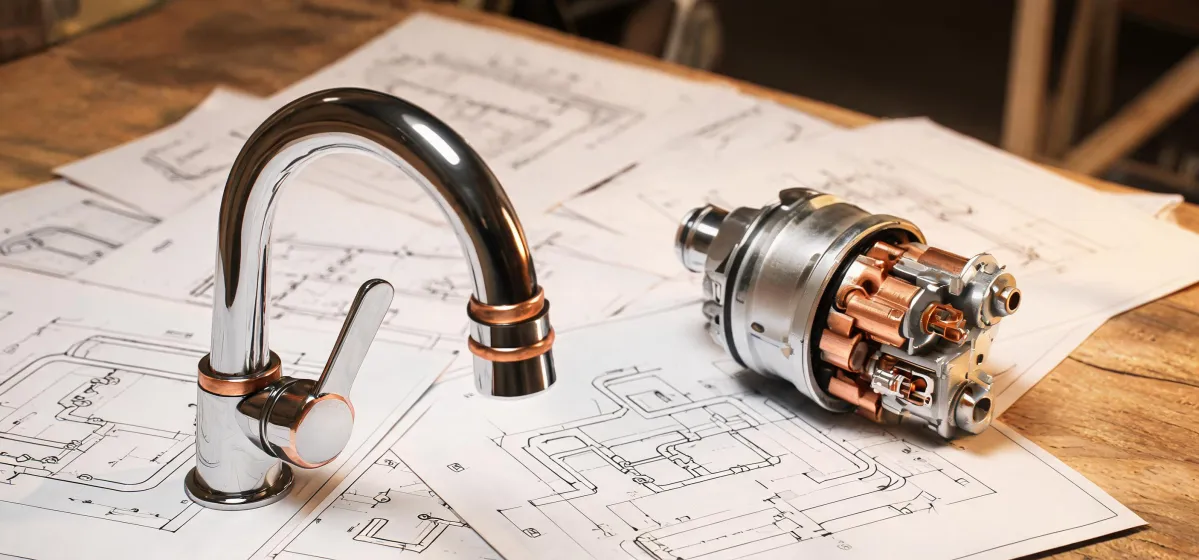
The Spec Sheet Said 'Moen-Compatible.' The Box Said Something Else.
I still remember the Tuesday morning when our receiving team flagged a pallet of kitchen faucets. The purchase order specified Moen 1225 cartridge compatibility. The spec sheet the vendor sent over said "Moen-compatible ceramic cartridge, 1225 equivalent." Looked fine on paper.
Then I opened a box.
The cartridge housing was 2mm shorter. Not enough to notice by eye. Enough to fail our pressure test at 80 PSI. We'd ordered 4,000 units for a multifamily retrofit project. Every single one went back.
That vendor's response? "It's within industry standard tolerance."
Industry standard. Right. For a generic faucet, maybe. For a Moen kitchen faucet spec on a commercial job where the property manager has a 10-year fixture warranty expectation? No. Absolutely not.
Here's the thing: this wasn't a bad factory. Their upstream production line was clean, ISO-certified, and their workers knew what they were doing. The failure happened before the first steel was cut. It happened in how the buyer wrote the spec—and how the vendor interpreted it.
The Real Reason Commercial Faucet Orders Fail (It's Not Quality Control)
I've reviewed somewhere around 2,000 fixture SKUs over the past four years. Rejected maybe 8% of first deliveries. The rejection reasons almost never trace back to manufacturing defects.
They trace back to something more uncomfortable: specification drift.
Specification drift is what happens when a general requirement ("Moen-quality finish") gets translated through three or four intermediaries—your procurement team, their sales rep, the trading company, the factory's order desk—and arrives at the production line as something subtly, expensively different.
People think bad faucets come from bad factories. Usually, the relationship runs the other way: factories that receive unclear specs produce inconsistent output, which then gets labeled as "low quality." The causation isn't what most buyers assume.
Where the Drift Actually Happens
Three places, consistently:
1. Finish specification. "Brushed nickel" means something different in a Moen catalog than it does in a factory's internal finish chart. Moen's brushed nickel has a specific grain direction, a specific luster range, and a specific PVD coating thickness. A factory can produce a beautiful brushed nickel finish that looks right in a photo and fails salt-spray testing at 200 hours because nobody specified the coating process.
2. Cartridge and valve compatibility. This is where shower valves get tricky. A "Moen 1222 replacement cartridge compatible" claim might mean it fits the valve body. It might mean it functions at the same flow rate. It might mean it passes the same cycle testing. Those are three different claims, and vendors rarely clarify which one they're making.
3. Packaging and branding requirements. I've seen entire orders rejected because the retail packaging said "Moen-style" instead of being plain white-box. For a distributor selling to contractors, that's fine. For a distributor selling to a retailer who expects to see Moen-branded packaging, it's a total loss.
"This was true 15 years ago when overseas sourcing meant faxing a spec sheet and hoping for the best. Today, the tools exist to prevent almost every one of these failures. The problem is nobody uses them."
What Specification Drift Actually Costs You
Let me put real numbers on this, because "quality issues are expensive" is the kind of vague statement that doesn't change anyone's behavior.
On that 4,000-unit faucet order I mentioned: the redo cost the vendor roughly $18,000 in materials and labor. It cost us six weeks of project delay. The general contractor charged us a $4,200 extension fee. The property manager threatened to pull the remaining $60,000 of the fixture package. We kept the account, but it took three face-to-face meetings and a discount we didn't want to give.
Total damage for a 2mm cartridge housing difference: somewhere north of $25,000. On an order that was worth maybe $180,000.
That's the visible cost. The invisible cost is worse. Once a project manager sees a failed fixture delivery, every subsequent order from your warehouse gets inspected with a magnifying glass. Your receiving team starts flagging things that aren't actually problems. Your project timelines build in buffer weeks that don't need to exist. Trust erodes in increments, and it takes years to rebuild.
I ran a rough internal audit last year: projects where we had zero fixture-related delays in the first 90 days had a 22% higher on-time completion rate than projects with even one flagged delivery. One flagged delivery. That's the threshold.
The Hidden Cost Nobody Talks About
Small orders get hit hardest.
Here's what I mean. A 50-unit order for a single bathroom remodel gets the same specification drift risk as a 5,000-unit order. But the 50-unit buyer usually doesn't have a quality team, doesn't have a receiving inspection protocol, and doesn't have the leverage to make a vendor eat the redo cost. So they install the faucets. They hope for the best. Six months later, a cartridge fails, and they're the one getting the angry phone call.
The industry has a quiet bias against small orders. Not malicious—just structural. Vendors prioritize the 5,000-unit accounts because that's where the revenue is. The 50-unit buyer gets a standard spec sheet, a standard lead time, and standard (read: minimal) attention.
But here's what I've learned after four years of this: the small orders are where the real test happens. A vendor that treats a $2,000 order with the same specification rigor as a $200,000 order is a vendor that actually has a quality system, not just a quality brochure.
When I was starting out in procurement, the vendors who took my $500 orders seriously—who sent me actual spec sheets instead of just a price list, who flagged potential compatibility issues before I ordered—those are the vendors I still use for six-figure orders today.
Small doesn't mean unimportant. It means potential.
What Actually Prevents This (And Why Most Buyers Skip It)
The solution is embarrassingly simple and almost nobody does it consistently.
Request a physical specification confirmation before production. Not a digital spec sheet. A physical sample, or at minimum, a production-line photo of the actual component being manufactured against your written spec.
I know. That sounds like overkill. It's not. Here's the protocol that dropped our first-delivery rejection rate from 8% to under 2%:
Step 1: Write the spec in numbers, not adjectives. Not "premium finish"—"PVD brushed nickel, 0.5-0.8 micron thickness, salt spray tested to 300 hours per ASTM B117."
Step 2: Require a pre-production sample for any order over $5,000. Yes, even for replacement parts and cartridges. Especially for cartridges.
Step 3: Build a one-page receiving checklist. Cartridge part number matches? Finish color matches approved sample? Packaging matches PO? Three questions. Takes 90 seconds per pallet. Catches 80% of drift.
Step 4: For shower valves specifically—because they're the most expensive to fix after installation—require cycle testing documentation. Moen 1222-compatible valves should handle 100,000 cycles. If the vendor can't provide that documentation, find another vendor.
"Dodged a bullet last month when I insisted on a pre-production sample for a 200-unit shower valve order. The sample's thermostatic cartridge had a 15-degree temperature swing on the cold side. Normal tolerance is 5 degrees. The vendor's internal testing hadn't caught it because their test rig didn't replicate real-world pressure conditions. We caught it before 200 units got installed in a hotel."
The frustrating part: every buyer knows they should do this. The information is available. Moen publishes their specification sheets. Industry standards for cartridges and finishes are publicly documented. The gap isn't knowledge. It's discipline.
And I get it. When you're managing 40 open POs and three project deadlines, requesting a pre-production sample feels like adding friction to an already overloaded process. But the 30 minutes you spend on spec verification saves you the six weeks you'd spend managing a redo.
That's the trade. Every time.
The One-Page Spec Sheet That Changed How We Order
We now include a one-page specification confirmation form in every PO over $3,000. It has seven fields:
- Product description with exact model reference
- Cartridge/valve part number and compatibility standard
- Finish specification with test standard reference
- Packaging requirement (retail box, plain box, or bulk)
- Pre-production sample requirement (yes/no)
- Receiving inspection checklist
- Consequence clause: who pays for redo if spec fails
The whole thing fits on one page. It takes 20 minutes to fill out. And it's prevented more problems than any other process change we've implemented in the past three years.
The vendors who push back on it? Those are the vendors we don't use anymore. The ones who appreciate it—who say "finally, a buyer who knows what they want"—those are the ones who get our repeat business.
Good faucets and shower systems aren't hard to source. Moen makes them. Their authorized distributors make them. Even private-label manufacturers can make them if the spec is tight enough. What's hard is writing a spec that survives the journey from your PO to the factory floor without getting diluted into something that fails inspection.
Fix the spec. Everything else follows.

Emilia Novak
Emilia Novak is a flooring and architectural-surfaces analyst covering ceramic and porcelain tile, natural stone, resilient flooring, underlayments, countertops, adhesives, grout, and installation accessories. She uses ASTM C373 and ASTM C648 test evidence while comparing water absorption, breaking strength, slab flatness, substrate moisture, joint width, slip resistance, and installed tolerances. Her specification guides help architects, contractors, and buyers match surface systems to traffic, wet-area exposure, maintenance demands, and substrate conditions.