Technical article
What a $1,250 Shower Leak Taught Me About Commercial Faucet Sourcing
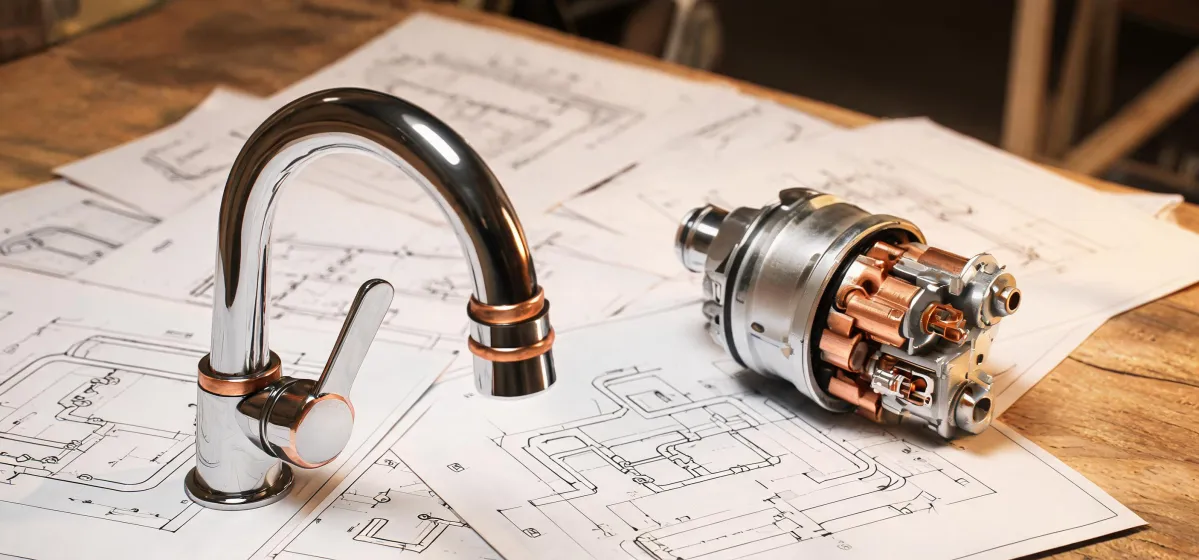
The Morning the Shower Died
March 2024. 7:40 AM. A Thursday I wasn't ready for.
The facilities manager from our downtown office called. Water was running down the wall behind the shower system in the locker room. He'd already shut off the water main, but the damage was done—drywall stained, tile discolored, a puddle spreading into the gym area.
Here's my role in all this. I'm the office administrator for a 400-person manufacturing company across three locations. I handle all the facility purchasing—roughly $350,000 a year, spread across eight vendors. I report to both operations and finance. That means I feel the squeeze from both directions: operations wants it fixed fast, finance wants it bought cheap. Usually, I'm the one in the middle.
The showers were original to the 2009 build. Moen fixtures throughout. After 12 years of daily use, those fixtures were finally giving out. What started as one broken cartridge quickly became a full list: a Moen shower cartridge replacement for the locker room, two more for the other locations, plus a Moen kitchen faucet in the break room that had been dripping since Thanksgiving.
The Cheap Route That Wasn't
I started the way most of us start. I searched online.
Plenty of options out there. One seller offered "genuine Moen shower cartridge replacement" parts at 32% below what our regular plumbing supplier charged. Another had generic cartridges at half the price. The Moen kitchen faucets were discounted too. Total potential savings: about $410, plus free shipping. I ran the numbers, forwarded them to my VP, and got approval within hours. It felt like good purchasing.
Let me pause and name the red flag I missed. The seller's address was a P.O. box in another state. Their invoice process didn't really exist. And when the package arrived, the cartridges looked just slightly off—rough plastic molding, a faintly blurry part number. Somewhere in my head, a small voice said, "this is how people get burned." I muted it.
It wasn't.
The invoicing failed first. The seller couldn't provide a real invoice, just a PayPal receipt and a handwritten note. Finance rejected the expense report, and I spent a week re-submitting it with screenshots and a signed statement. Then, 90 days later, the locker room cartridge failed. Not a drip. A steady leak behind the tile. Repair cost: $1,250. Facility downtime: one week. The maintenance crew even watched a YouTube video that claimed a Moen shower cartridge replacement takes 10 minutes. It does, when the cartridge is genuine and fits correctly. Ours took two hours because the knockoff didn't seat properly. The 10-minute part? Not exactly.
The return process was another joke. They asked me to ship the leaking cartridge back before considering a refund. I sent it in a USPS large envelope—$1.50 in postage at the January 2025 rate, per usps.com—and never heard from them again.
So I learned the hard way that the number on the invoice is only a small piece of a part's real cost.
How I Learned to Evaluate Shower System Manufacturers
After the repair, my VP gave me a second chance with a clear mandate: "Don't just replace the cartridge. Fix the approach."
So I called the plumbing contractor who'd built our original office and asked for a referral. That's how I found the commercial distributor who taught me how to evaluate shower system manufacturers—and honestly, how to do commercial faucet sourcing at all.
They opened with three questions I couldn't answer:
- Are these authorized replacement parts, or parts that simply match the part number?
- Does the warranty cover the whole system, or just the cartridge?
- What's the maintenance plan for every other fixture in this building?
I didn't have good answers. Here's what I learned since.
Authorization matters more than the logo on the box
Not everyone who sells a Moen-labeled cartridge is authorized to sell it. Unauthorized sellers can't process warranty claims, and Moen's warranty—which is genuinely valuable, even on commercial products—only applies to genuine parts purchased through authorized channels. I'm not saying every independent plumbing supplier is a risk. Some of the best quotes I've gotten came from small local shops. But the no-name online seller with the P.O. box? That was a gamble. Period.
Claims deserve scrutiny
When I contacted manufacturers directly, one vendor promised "maintenance-free" shower systems. Sounded perfect. But when I asked for the spec sheet, "maintenance-free" meant only that the valve face is sealed. The cartridges still need replacing. The claim wasn't technically false, but it was misleading in context. FTC advertising guidelines require claims to be substantiated, and that experience taught me to read the fine print before trusting marketing language.
Parts availability is a 10-year question
A shower system can last 20 years. Its internal cartridge won't. So now I ask, "Can I order a replacement cartridge for this system in 2034?" A manufacturer with serious distribution answers with a part number. One without distribution shrugs. That's a big reason we stuck with Moen—their commercial line has deep parts availability, which is exactly what a maintenance-focused buyer wants to hear.
The surfaces around the fixture matter
The damage in our locker room wasn't caused by the cartridge alone. It was the water that found its way through tile grout and behind the wall. The distributor introduced me to a protective coating distributor, who supplied a water-resistant coating for the shower walls and sealed the tile seams. A 15-minute conversation that will probably save us thousands in future water damage. I never would have thought about coatings on my own.
What Changed
We replaced the locker room system with a new commercial Moen valve, genuine cartridges, and new trim. Swapped the break room faucet for a legitimate Moen kitchen faucet. And proactively replaced the worn cartridges at our other two locations before they failed too.
The upfront cost was about 18% more than my "cheap" route. The lifecycle cost is dramatically lower. Eight months in, we've had zero maintenance callbacks. Before, we averaged five per quarter across the three buildings.
My vendor list changed too. I used to juggle eight vendors for different needs. Now I use five. The distributor who helped me through this mess supplies our fixtures, cartridges, sealants, pipe fittings, and coatings. They send clean e-invoices, which saves our accounting team roughly six hours a month. That was an unexpected win from our 2025 vendor consolidation project.
Bottom Line: Efficiency Is a Feature, Not a Price
The old thinking—"buy cheap, maintain often"—comes from an era when commercial fixtures were commodity items with no warranty support. That's changed. Today, the efficient choice is the well-documented one: genuine part, authorized channel, spec sheet in hand.
You could argue, and some colleagues have, that I just got unlucky with one bad seller. There's truth to that. But I also created the circumstances. I compared prices before comparing trust. Now I do the reverse.
One more honest reflection. Looking back, I should have called a distributor on day one. At the time, saving $410 felt like a win. It was a loss wearing a discount as a disguise.
And a deeper point. People assume expensive vendors charge more because they deliver quality. After living through this, I think the causation runs the other way. Vendors who deliver quality, documentation, and warranty support can charge more because they solve more than one broken part—they solve process headaches.
My experience is based on roughly 200 mid-range facility orders across three commercial locations, mostly domestic vendors. If you're sourcing for luxury hospitality or heavy industrial plants, your mileage might differ. The part about documentation and warranty? That applies just about everywhere.
So my simple rule now—trust me on this one: the invoice isn't the price. The price is the invoice plus the failures, the rework, the phone calls, and the hours your finance team spends chasing a real receipt. A vendor who charges a fair price and hands you proper documentation is cheaper than any discount attached to a gamble.

Emilia Novak
Emilia Novak is a flooring and architectural-surfaces analyst covering ceramic and porcelain tile, natural stone, resilient flooring, underlayments, countertops, adhesives, grout, and installation accessories. She uses ASTM C373 and ASTM C648 test evidence while comparing water absorption, breaking strength, slab flatness, substrate moisture, joint width, slip resistance, and installed tolerances. Her specification guides help architects, contractors, and buyers match surface systems to traffic, wet-area exposure, maintenance demands, and substrate conditions.