Technical article
Moen-Spec Fixtures vs. Generic Wholesale: A TCO Comparison for Facilities Buyers
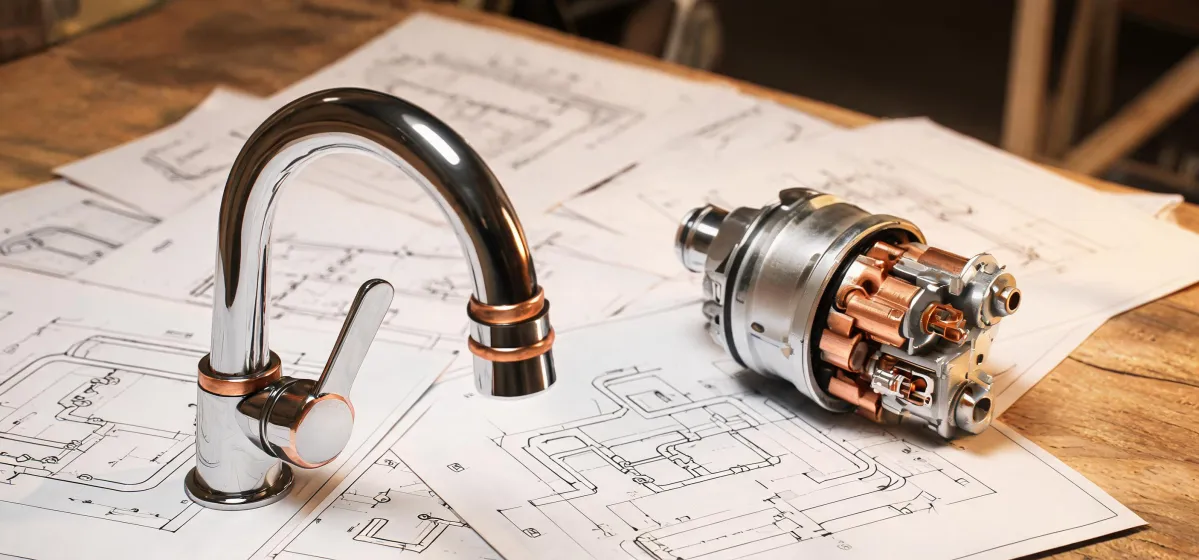
I manage facilities and vendor purchasing for a 340-person company across three offices. When we started planning a multi-site plumbing refresh in early 2024—Moen kitchen faucets, Moen shower diverters, protective coatings, and industrial sealant for the pipe fittings—I built the comparison spreadsheet the way most procurement people do: branded spec components in one column, generic wholesale equivalents in the other, unit prices down the middle.
That spreadsheet was wrong. Not the numbers—the framing. It took me two completed sites and roughly 40 purchase orders to understand that the real comparison isn't "branded vs. generic." It's Moen-spec sourcing vs. generic wholesale sourcing, and those two approaches diverge in ways a unit-price column can't show you.
So here's the framework I now use, and the three dimensions where the two actually separate. I'm writing from a facilities procurement desk, not a showroom floor. If you're specifying new construction rather than retrofitting occupied buildings, your mileage will differ.
What I'm Actually Comparing
Two sourcing paths for the same project scope:
- Moen-spec sourcing: branded or Moen-compatible spec components—kitchen faucets, shower diverters, matching rough-in valves—sourced through authorized or spec-aligned channels, with documented warranty and compliance paperwork.
- Generic wholesale sourcing: components that look equivalent on a spec sheet, bought on open wholesale markets (often by the pallet), where the warranty is whatever survives the freight.
The standard for comparison isn't "which is better." It's total cost of ownership across the asset's service life—because that's the number finance actually cares about, and it's the one that got me in trouble when I ignored it.
Dimension 1: Unit Price vs. Landed TCO
On paper, generic wholesale wins this dimension easily. That's the entire point of it. A Moen kitchen faucet sourced through spec channels can land 30–45% above a generic equivalent, and a Moen shower diverter runs a similar gap.
Here's where it broke down for me. My first site used generic diverters on 12 shower stalls. Three failed within the first eight months—not catastrophically, just enough to leak and trigger a service call. Each visit was a plumber at roughly $180 (labor only) plus the vacancy of that stall during business hours.
If I remember correctly, the generic diverters saved me around $900 upfront across that site. The three failures cost roughly $1,100 in labor and downtime—before I counted a fourth failure in month 11. (Should mention: we'd built in zero buffer for repair lead time, which made the downtime worse than it needed to be.)
Here's the counterintuitive part: when I priced the Moen-spec path honestly—unit price plus the labor and downtime I was carrying on the generic side—the branded route wasn't actually cheaper. But it was predictable, and predictable turned out to be the thing finance rewards.
Where this logic doesn't hold
I want to be careful not to overcorrect. For low-traffic fixtures or short-lifecycle applications—a break-room faucet replaced every three years anyway—generic wholesale is often the right call. My experience is based on mid-traffic commercial facilities. If you're specifying 24/7 or high-turnover environments, the math tilts further toward spec sourcing. If you're doing a temporary installation, it probably tilts the other way.
Dimension 2: Spec Match and Warranty Coverage
This is the dimension I underestimated most. Not warranty duration—warranty realizability.
Moen's limited lifetime warranty on its faucets and finishes is well documented, and I've filed claims on it. The process works. What I didn't appreciate until I tried it on the generic side is how much any warranty depends on the spec chain staying intact. A Moen shower diverter installed on a Moen-compatible rough-in valve is a known quantity: if it fails, the claim path is clear. A generic diverter on the same valve is a compatibility question, and compatibility questions are where warranty claims go to die.
The same logic applied to the protective coating and industrial sealant we bought for the pipe fittings—a scope I initially treated as completely separate from the faucet work. It wasn't. Sealant spec has to match the substrate and the coating system, or you're mixing chemistries. We lost about three weeks on one site because a generic sealant we sourced wasn't compatible with the coating already on the pipes. (Should mention: that wasn't the sealant's fault—it was mine, for not checking the spec sheet against the existing system.)
For coating and sealant sourcing specifically, I now require a written spec match from the vendor before any order over a few hundred dollars. That's also how I'd answer "how to choose industrial sealant for wholesale": stop comparing unit prices and start comparing spec documentation. If a wholesale supplier can't or won't provide a written spec match, that's a data point. At least, that's been my experience with domestic channels—I can't speak to how international sourcing handles this.
Dimension 3: Parts Availability and Supply Reliability
This is where the generic wholesale story usually falls apart, but the reason may not be what you expect.
It's not that generic parts are hard to find. It's that the same generic part is hard to find twice. Wholesale channels rotate SKUs, change suppliers, and revise specs without notice. So when a diverter fails 14 months in, the part that matches isn't always the part you bought—it's whatever the market is carrying that week.
Moen-spec sourcing—particularly for shower system sourcing across multiple sites—tends to hold a part number stable across years. In a facilities context, that stability is worth money, because it lets you stock a small parts inventory with confidence that it'll still be compatible when you need it.
Here's the part that surprised me: for protective coating and industrial sealant specifically, the availability calculus flipped. Generic wholesale suppliers often carried more specification options—different cure times, substrate compatibility ranges, packaging formats—than the branded channels we'd been using. For that slice of the scope, generic sourcing was genuinely the better operational fit. It's not a brand story. It's a distribution story, and it varies by product category.
How I'd Choose, By Scenario
After two completed sites and about 40 orders, this is my honest decision tree. It's a judgment framework, not a rulebook.
- High-traffic shower systems, Moen kitchen faucets, and anything with a visible finish warranty: Moen-spec sourcing. The predictability of parts and the clean warranty path usually outweigh the unit-price gap.
- Matching protective coating and industrial sealant to an existing pipe system: whichever channel provides a written spec match first. Often generic wholesale, sometimes branded—it depends on the supplier, not the logo.
- Low-traffic or short-lifecycle fixtures: generic wholesale. Just build a repair buffer into the schedule and price it into the TCO.
- Multi-site rollouts with a long service horizon: Moen-spec for the fixtures, mixed sourcing for the consumables. Lock the spec first, then let the market compete on the rest.
The one change I'd make if I were starting over: I'd run every component through the same TCO frame from day one, instead of letting the faucet line and the sealant line live in separate spreadsheets. The categories feel separate at the purchasing desk. They aren't, at the building level.
Pricing referenced here reflects mid-2024 through January 2025 quotes for mid-range commercial facilities. Verify current pricing and warranty terms directly with your suppliers—spec sheets and programs change.

Laila Mensah
Laila Mensah is an exterior-access and building-mobility analyst covering composite decking, fencing, guardrails, handrails, stair systems, ramps, elevators, escalators, and associated hardware. She uses ASTM D7032 evidence for wood-plastic composite deck boards and guards while separately examining rated load, span, fastener spacing, slip resistance, corrosion exposure, clearances, travel speed, stopping accuracy, and emergency operation. Her comparisons help designers, contractors, and property teams coordinate safe circulation, weather durability, accessibility, installation interfaces, and maintenance planning.