Technical article
Moen Kitchen Faucets, Bulk Vanities, and Protective Coating Specs: A Quality Manager's Scenario Guide
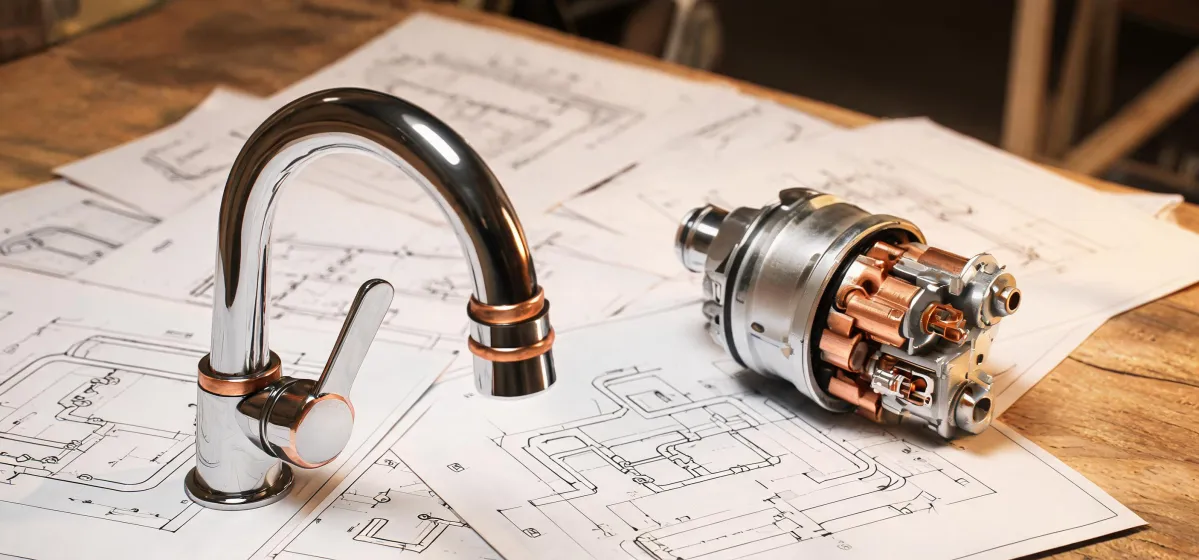
I'm a quality compliance manager at a building materials supplier. I review roughly 200 product submittals a year before they go into project quotes. In Q1 2025, I rejected about 12% of first submissions. Not because the products were necessarily bad, but because the specifications didn't match the project. That gap is exactly what this article is about.
Here's the thing: there is no single 'best' Moen kitchen faucet, no universal bulk bathroom vanity spec, and no one-size-fits-all method for evaluating architectural coating manufacturers. What makes sense depends on the project stage, the building's use, and how future failures will be handled. So let's walk through three scenarios. I do not want you to walk away from this article with a shopping list. I want you to walk away with a set of questions that match your project.
Start with the Scenario
From the outside, choosing a faucet and a coating system for a building project looks like a catalog exercise. The reality is different. Renovation, new construction, and maintenance have different risk profiles, and the right decision follows the risk.
Most buyers focus on unit price and lead time and completely miss the test data, warranty terms, and spare parts availability. Those are the factors that decide whether you get a one-time discount or a long-term headache.
Scenario 1: Multi-Unit Renovation — Consistency Beats Novelty
If you're furnishing 40 apartments, you cannot have 40 different faucet styles. For kitchens, the Moen Adler kitchen faucet is a line I keep coming back to. It's not the flashiest faucet in the catalog, and that's exactly the point. The high-arc shape is familiar, the operation is straightforward, and the finish is designed for daily use.
Why Adler specifically? Because it's a line that's been around long enough that replacement parts are available. For a renovation, I'd rather spec a faucet with production history than a brand-new model with unknown failure patterns. New models are fine, but in a multi-unit setting, the cost of a field failure is multiplied by every door.
Bulk bathroom vanities work the same way. The vanity is the first thing a tenant notices. But the hidden parts—the moisture seal on the substrate, the edge banding, the hinges—determine whether it survives the second year. When I write a bulk bathroom vanity spec, I focus on water resistance, not just color and countertop material. I also ask suppliers to confirm the exact batch that will be shipped. Not a photo. Not a showroom sample. The batch sample. If they can't produce it, that tells you something.
Scenario 2: New Construction — How to Evaluate Architectural Coating Manufacturers
New construction is where protective coating specifications do the heavy lifting. This is also where I see the biggest difference between good and average projects.
When I evaluate an architectural coating manufacturer, I don't start with the color card. I start with their willingness to show performance data. The ideal response to 'show me your test reports' is not a link to a marketing page. It's a third-party report with the coating name, test method, and date. The reports should include salt spray testing (ASTM B117), tape adhesion (ASTM D3359), and color tolerance (ASTM D2244). If a report doesn't show a batch or production code, it's a general reference, not a verification document.
Here's the question I ask every coating manufacturer now: What's NOT included in your quote? The vendor who lists line items for testing, surface prep, application, and disposal—even if the total looks higher—usually costs less in the end. The vendor who gives a single per-gallon price often has surprises later. I've learned to ask that question before I ask 'what's the price?' That's a lesson learned the hard way.
The vendor who lists all fees upfront—even if the total looks higher—usually costs less in the end.
Also ask about failure policy. If the coating fails adhesion after installation, will the manufacturer stand behind only the material, or also the labor? The answer tells you how confident they are. A cheap coating with no support is not a spec; it's a bet.
One more detail: if a manufacturer says 'we meet AAMA 2605' but can't produce the test report for the exact color you're selecting, be careful. Dark colors and custom colors can perform differently from the standard line. The same logic applies to protective coatings on bathroom vanities and fixtures—the substrate under the coating matters more than the gloss level.
I had to make this call on a tight schedule once. We had 48 hours to approve a substitute coating before a purchasing window closed. Normally I'd run a full accelerated weathering comparison, but there was no time. I approved it conditionally: the manufacturer had to provide batch-specific test reports and agree to a field inspection after application. That compromise worked, but it only worked because the manufacturer was willing to put terms in writing.
Scenario 3: Maintenance and Replacement — When Warranty Backing Matters
For an occupied building, the question changes from 'what looks good' to 'what can we get serviced quickly?' A Moen kitchen faucet is a safe call in this scenario because of the warranty network and replaceable cartridges. If you're matching existing units, the Moen Adler kitchen faucet can be a practical choice for the same reason the line works in renovations: parts availability.
Moen's residential faucets are covered by a limited lifetime warranty against leaks and finish defects for the original owner (Source: Moen warranty documentation, moen.com, accessed January 2025). For commercial projects, warranty terms are different, so verify the coverage before you write it into a bid. If a spec says 'warranty as per manufacturer' and the building is not a single-family home, that phrase is doing a lot of work.
When I review a replacement faucet submittal, I check three things: cartridge type, finish code, and parts availability. A faucet with a great warranty but no available parts is worse than no warranty. For a bulk bathroom vanity order in a maintenance situation, the priority is matching dimensions and sink hole locations—not finding a new style.
Which Scenario Are You In?
Not sure which bucket you're in? Here's a quick test.
- Are you touching a space that's already occupied? If yes, start with Scenario 3 unless the scope is large enough to be a renovation—then Scenario 1 applies. Ask whether the faucet and vanity are being replaced as part of a refresh or because of a failure.
- Are you specifying a building that doesn't exist yet? Start with Scenario 2, and make coating evaluation a formal part of your submittal process.
- Are you ordering more than 20 units of the same item? Even if the project started as maintenance, you've crossed into bulk territory. Bulk orders need batch consistency and warranty documentation.
Use that as a filter, not a rule. I've seen projects that start as a simple faucet replacement and end up requiring full coating specs because the water damage was worse than expected. Actually, I've seen exactly that three times in the last two years—not a huge pattern, but a real one.
At the end, the goal isn't to find the most premium option. It's to match the option to your project's actual failure mode. Renovations fail on consistency. New builds fail on verification. Maintenance fails on serviceability. Ask the right questions for your scenario, and you'll get a better result—without reading every brochure in the industry.

Emilia Novak
Emilia Novak is a flooring and architectural-surfaces analyst covering ceramic and porcelain tile, natural stone, resilient flooring, underlayments, countertops, adhesives, grout, and installation accessories. She uses ASTM C373 and ASTM C648 test evidence while comparing water absorption, breaking strength, slab flatness, substrate moisture, joint width, slip resistance, and installed tolerances. Her specification guides help architects, contractors, and buyers match surface systems to traffic, wet-area exposure, maintenance demands, and substrate conditions.