Technical article
Bulk Moen Faucet Sourcing: The $4,700 Lesson on Specs and Delivery Certainty
-
The Number That Actually Decides Your Budget
-
Case One: The Moen Shower Cartridge 1222 That Wasn't
-
Case Two: Kitchen Faucet Wholesale Is a Category, Not a Standard
-
Case Three: Sealants and Coatings, Where "Close Enough" Gets Expensive
-
The Counterintuitive Part: Expensive Vendors Aren't Expensive by Accident
-
Where This Advice Breaks Down
-
What I Actually Check Now
The Number That Actually Decides Your Budget
When you're sourcing Moen kitchen faucets, shower cartridges, or construction sealants by the pallet, the unit price isn't the number that decides your budget. The number that decides your budget is landed cost plus delivery certainty — and most B2B buyers only negotiate the first half.
I learned that the expensive way. Since 2018 I've handled material procurement for a mid-size MEP contractor, mostly spec work — bathrooms, kitchens, and exterior finishes for commercial buildouts. In my first three years I approved orders that cost us somewhere around $19,000 in rework, return freight, and missed crew days. Almost none of that came from price. It came from specs I skimmed and lead times I believed.
Now every PO on my desk runs through a one-page checklist my team half-jokes about. It's the only reason I sleep before a shipment arrives.
Case One: The Moen Shower Cartridge 1222 That Wasn't
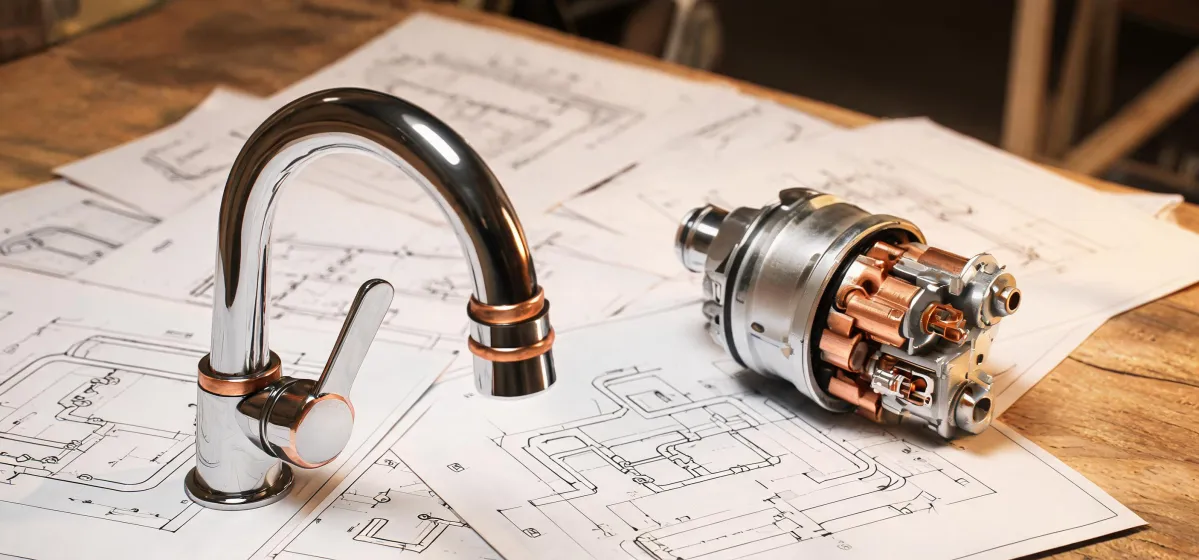
In late 2021 we had a hotel renovation with 140 bathrooms on a tight handover date. The spec called for Moen shower cartridge 1222 — the standard single-handle cartridge used across a huge range of Moen valve bodies. Easy, right?
We submitted a substitute that was labeled "compatible." The supplier confirmed compatibility in writing. The cartridges arrived in one pallet, well-packaged, correct count. Did I verify the generation against the manufacturer's own documentation? No. I trusted the word "compatible."
They didn't fit. Not "fit badly" — they didn't seat at all. Turns out the substitute matched the valve body generation but not the retaining clip design, which apparently changed at some point in the catalog that nobody flagged. We found out at installation, on site, with two plumbers standing around waiting.
Cost: about $4,700 between return freight, expedited replacement, and two lost crew days. The price difference we "saved" by choosing the substitute over the exact 1222 was roughly $600.
That's the ratio I want you to sit with. $600 saved, $4,700 spent. And a handover date that slipped anyway.
Case Two: Kitchen Faucet Wholesale Is a Category, Not a Standard
Wholesale kitchen faucet pricing looks standardized until you start comparing details. Three things break it:
- Flow rate certification. The same body can ship with 1.8 GPM or 2.2 GPM internals depending on the target market. If your project pulls a permit specifying flow rate, a cheaper SKU can get rejected at final inspection.
- Finish warranty terms. A brushed finish from one production run and the same finish name from another can carry different warranty lengths. That's a callback you eat, not the manufacturer.
- Cartridge generation. If you're stocking replacement parts, mixing cartridge generations across a property means your maintenance team now hauls two SKUs on the truck instead of one.
I don't think most wholesalers are hiding any of this. The information exists. It just doesn't survive the trip from a spec sheet to a purchase order unless somebody checks.
It's tempting to think you can just compare per-unit quotes across three suppliers and pick the middle one. But identical specs from different vendors can still produce wildly different outcomes, because the spec sheet describes the product — not the batch, not the certification, not the retaining clip that keeps it in the valve.
Case Three: Sealants and Coatings, Where "Close Enough" Gets Expensive
I'll be upfront about the limits of my experience: I'm a procurement guy, not a chemist. If you need to evaluate VOC compliance or formulation-level performance against a specific architectural coating specification guide, that's a conversation for your spec writer or the manufacturer's technical rep, not me.
What I can tell you from the buying side is this: two failure modes show up over and over.
First, buyers treat a coating spec as a starting point for negotiation instead of a floor. "Can we get this cheaper?" turns into a substitution with slightly wrong solids content, slightly wrong dry time, and a slightly wrong cure window that the schedule then blows past anyway. Second, construction sealant manufacturers quote wildly different shelf lives on comparable products. If your project runs 14 months and you buy a 12-month sealant in month 3, you're installing expired material in month 9 (and nobody will notice until it fails).
The pattern across all three cases is the same. Price is the easiest thing to compare and the easiest thing to get wrong. Time, specs, and batch consistency are harder to compare and matter more.
The Counterintuitive Part: Expensive Vendors Aren't Expensive by Accident
People assume vendors charge more because they deliver better. That's backwards. Vendors who deliver reliably — on the date, to spec, with documentation — can charge more, because their customers stop shopping on price. The causation runs the other way.
Same logic with rush fees. Buyers think rush charges exist because the vendor is squeezing them. In reality, rush jobs are expensive because they're unpredictable. They blow up a production schedule that was already planned around other customers. You're paying the vendor to reshuffle a week of work on your behalf. If they can't reshuffle, they'll quote a number that makes the risk worth it. Either way, the certainty you're buying is real, and it isn't free.
Once I stopped shopping on unit price and started budgeting for delivery certainty, our project-level cost went down — not up. Because the expensive failures stopped.
Where This Advice Breaks Down
Credit where it's due: this isn't universal advice.
If you're buying standard SKUs in low volume for non-deadline work — a maintenance closet, a small office rehab — price-first sourcing is fine. The downside risk is small and the certainty premium isn't worth paying. Don't over-engineer a $300 order.
If your supplier relationship is genuinely rock-solid and you've bought the same cartridge generation for years, you can loosen up the checklist. But update it when the manufacturer revises the catalog, because the clip design will change and nobody will call you.
And I don't have hard data on industry-wide defect rates. What I can say anecdotally, from six-plus years of orders, is that spec issues show up on roughly one in ten first deliveries when we're buying from a new supplier (e.g., wrong generation, missing certification, unverified shelf life). When we buy from the two or three suppliers we've vetted, it drops to near zero. That's not a study. It's just what our own logs show.
What I Actually Check Now
The list is short:
- Part number and generation — not just the family name. Moen shower cartridge 1222 means 1222, not "1222-compatible."
- Certification on the SKU, not the product line (like flow rate certification tied to a permit).
- Lead time in writing, with a dock date — not "ships within X days."
- Whether a substitute preserves the future maintenance SKU, not just this shipment.
- Who eats the freight on a return, decided before the return happens.
Everything else is paperwork.
The $4,700 wasn't the price of the wrong cartridges. It was the price of not checking. That's the whole point.

Warren Hughes
Warren Hughes is a building-envelope analyst specializing in windows, exterior doors, siding, cladding, architectural glass, curtain walls, storefronts, anchors, gaskets, and perimeter seals. He applies ASTM E283/E283M, ASTM E330/E330M, and ASTM E331 to their respective air-leakage, structural, and water-penetration evaluations while tracking pressure differential, deflection, leakage rate, drainage, glass make-up, and anchorage. His field-oriented guides help architects, façade contractors, and developers define mock-up tests, interface details, acceptance limits, and remedial priorities before enclosure closeout.