Technical article
Bathroom Fixture Wholesale Cost Guide: Why the Cheapest Quote Is Almost Never the Cheapest Order
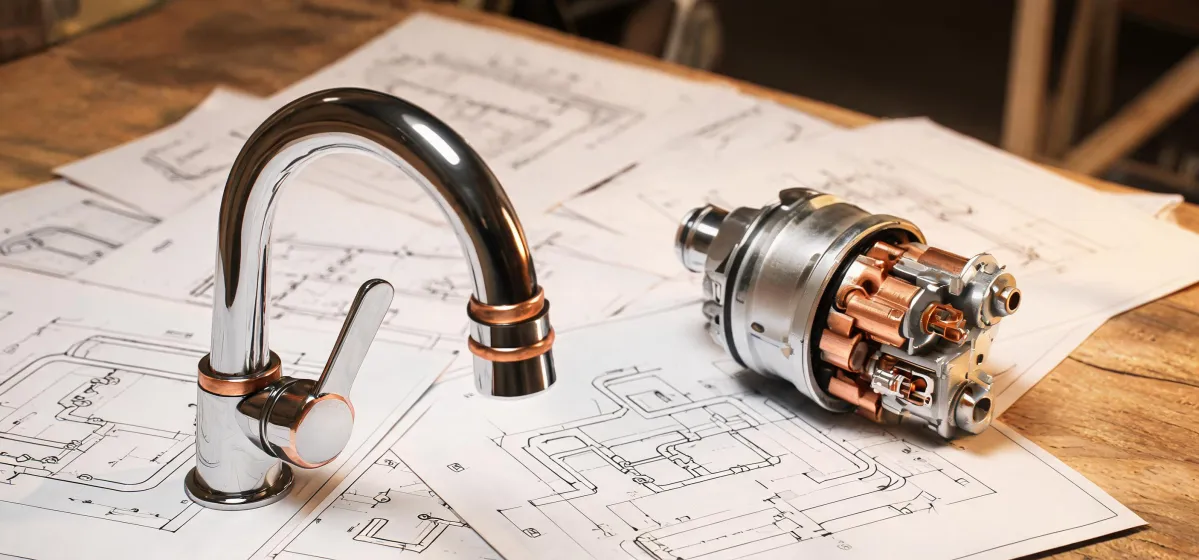
The Quote That Looked Like a Steal — Until It Wasn't
As the office administrator for a property management company, I handle all repair and maintenance material ordering for three office locations — pipe fittings, bathroom hardware, construction sealant, architectural coatings, and the occasional Moen kitchen faucet replacement. I process somewhere between 60 and 80 orders a year, roughly $120,000 annually across nine vendors. I report to both operations and finance, which means when something goes wrong with a purchase, I hear about it from two directions.
Two years ago, I got a bathroom fixture wholesale quote that caught my attention. Same tub spout diverter repair kit, same spec sheet, same week. One supplier quoted me $18. Another quoted $67.
I remember staring at that gap and thinking three things at once: Have I been overpaying this whole time? Is brand-name markup the only difference? Isn't this exactly the kind of thing you're supposed to find a cheaper option for?
I went with the $18 option.
It cost me roughly $1,800 over the next six months. Let me walk you through how that math works, because I think a lot of buyers are sitting on the same time bomb and don't know it yet.
What You Think You're Comparing (But Aren't)
Most buyers in the building materials space assume that when you request a quote for a specific product — a Moen tub spout diverter repair kit, a bucket of construction sealant, a batch of architectural coating — every vendor is quoting the same thing.
They're not.
The $18 diverter kit I ordered wasn't a Moen part. It was a "compatible" aftermarket version — it looked fine and threaded on without a fight. But it wasn't built to the same tolerance, it didn't carry the same finish warranty, and it had no paper trail linking it back to a traceable source.
Here's the part nobody explains to you upfront. In construction sealant wholesale and bathroom fixture wholesale, there are really three tiers flying around under the same product name:
- Brand-authentic products (e.g., Moen OEM parts with warranty coverage that follows the part)
- OEM / white-label equivalents — same or similar production lines, but the branding, warranty, and accountability sit with someone else
- Generic or compatible replacements — the cheapest version, and the one with the least accountability
None of these are inherently "bad." What causes the damage is putting them on the same comparison spreadsheet and evaluating them by the same criteria — especially price. What most people don't realize is that a $10 price difference between a brand part and a compatible part can hide a $200+ difference in downstream cost.
Most buyers focus on the per-unit price and completely miss the warranty-track, compliance-track, and rework costs that don't appear until three months after installation.
I had the same experience with Moen kitchen faucet cartridges on a separate order. The aftermarket version arrived in a plain box with a photocopied spec tag. It worked — for about eight months. The Moen-branded version on the adjacent sink was installed twelve months earlier and hasn't skipped a beat.
The Real Costs You Don't See on the Quote
What makes this a compounding problem instead of a one-time mistake is that the hidden costs don't hit all at once. They trickle in:
1. Rework cost
When a generic or non-authenticated part fails, you're not just paying to replace the part. You're paying for: the labor to identify the failure, the labor to reinstall, the coordination time with whoever installed it originally, the temporary disruption to the space, and possibly the cost of replacing multiple units if the failure is systemic. In my case, three out of twelve diverter kits failed. Fixing those three, plus the associated plumbing visits, ran me $1,800 — roughly quadruple what I "saved."
2. Compliance and acceptance cost
For architectural coatings and construction sealants, compliance documentation is not optional. If a project auditor rejects your sealant batch because you can't provide the technical data sheet and batch traceability, you can be required to remove and redo the work. The material cost is one thing; the rework labor and project delay cost is another. The FTC's advertising guidance is pretty clear that suppliers are responsible for substantiating product claims, but in practice you're the one who has to verify everything before it hits the job site.
3. Time cost
I did a six-item comparison in early 2024 to see what the real time delta looked like between sourcing from the cheapest possible option vs. a reliable supply chain. The paperwork, the follow-up on replacements, and the internal approval churn added up to a roughly 15-20% overhead on top of the original unit price. That doesn't show up in a line-item comparison at all.
4. Warranty cost
The Moen lifetime warranty is real and it's valuable — if the parts being installed are Moen parts and the installation meets spec. The moment you install a "compatible" part, you've disconnected from that warranty chain. It's not that the warranty doesn't exist anymore; it's that you no longer qualify.
The Numbers That Changed How I Buy
After the diverter kit fiasco, I started building a TCO (total cost of ownership) framework for every material purchase I make. It doesn't need to be a 40-line spreadsheet. Mine is five columns:
- Unit price and all-in landed cost (shipping, freight, handling)
- Warranty coverage and who executes it
- Rework exposure (based on historical failure rate for that product line)
- Compliance documentation availability
- Time cost estimate (how many extra hours this sourcing decision will cost me)
When I ran the diverter kit decision through this framework retroactively, the $18 option had a total landed cost of closer to $175 per unit once I allocated the rework. The $67 option — authenticated, warranted, traceable — came in around $72.
The "cheaper" vendor was more than double the real cost.
Here's the trade-off I won't hide from: for one-off, non-critical, short-term applications — a temporary patch, a non-warrantied cosmetic fix — the generic version is sometimes the right call. It's not always about buying the most expensive option. It's about making a deliberate choice instead of a price-driven mistake.
What Actually Counts as "Cheaper"
I don't ask "what's your best price" anymore. I ask "what's included, and what happens when something fails?"
That question has saved me more money in the last eighteen months than any negotiation tactic I've tried. Because the vendors who can answer it clearly — who can tell you exactly what warranty applies, what documentation comes with the order, what their failure response process looks like — are almost always the ones who end up being the least expensive when the dust settles.
The vendors who get uncomfortable with that question? That's your first red flag.
Bottom line: the cheapest quote is almost never the cheapest order. It's just the one where the hidden costs haven't arrived yet.

Nisha Kapoor
Nisha Kapoor is a construction-systems analyst covering formwork, scaffolding, shoring, prefabricated buildings, modular rooms, panelized assemblies, geotextiles, geogrids, and drainage composites. She uses ASTM D4595 and ASTM D6637 for their respective geotextile and geogrid tensile evaluations while tracking platform load, form deflection, prop spacing, module tolerance, lifting points, seam strength, aperture stability, and installation damage. Her technical guides help contractors, engineers, and developers coordinate temporary works, factory tolerances, site logistics, ground reinforcement, inspection hold points, and documented acceptance criteria.